Category:
Conversational UX
Created For:
Paula’s Choice

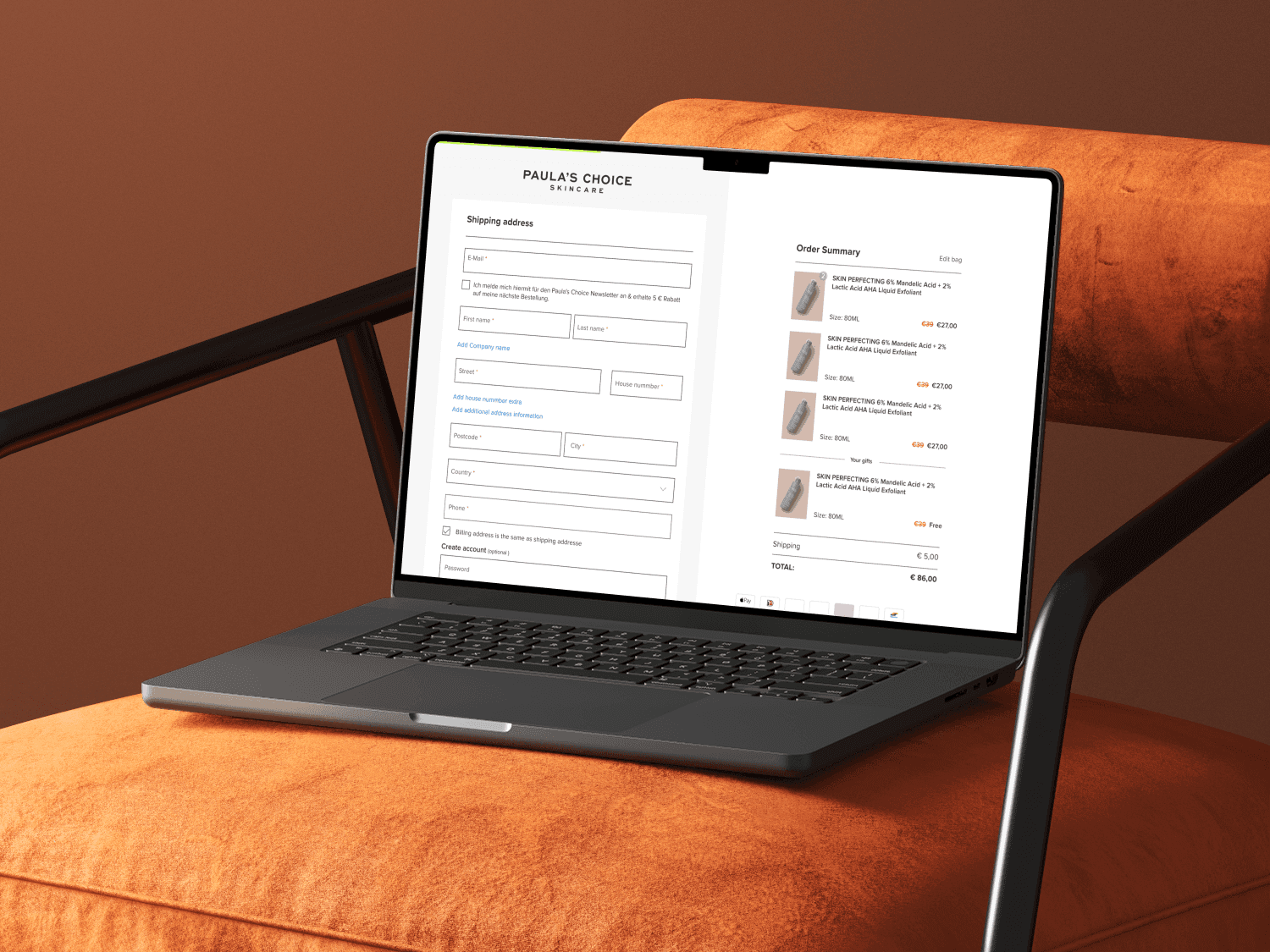
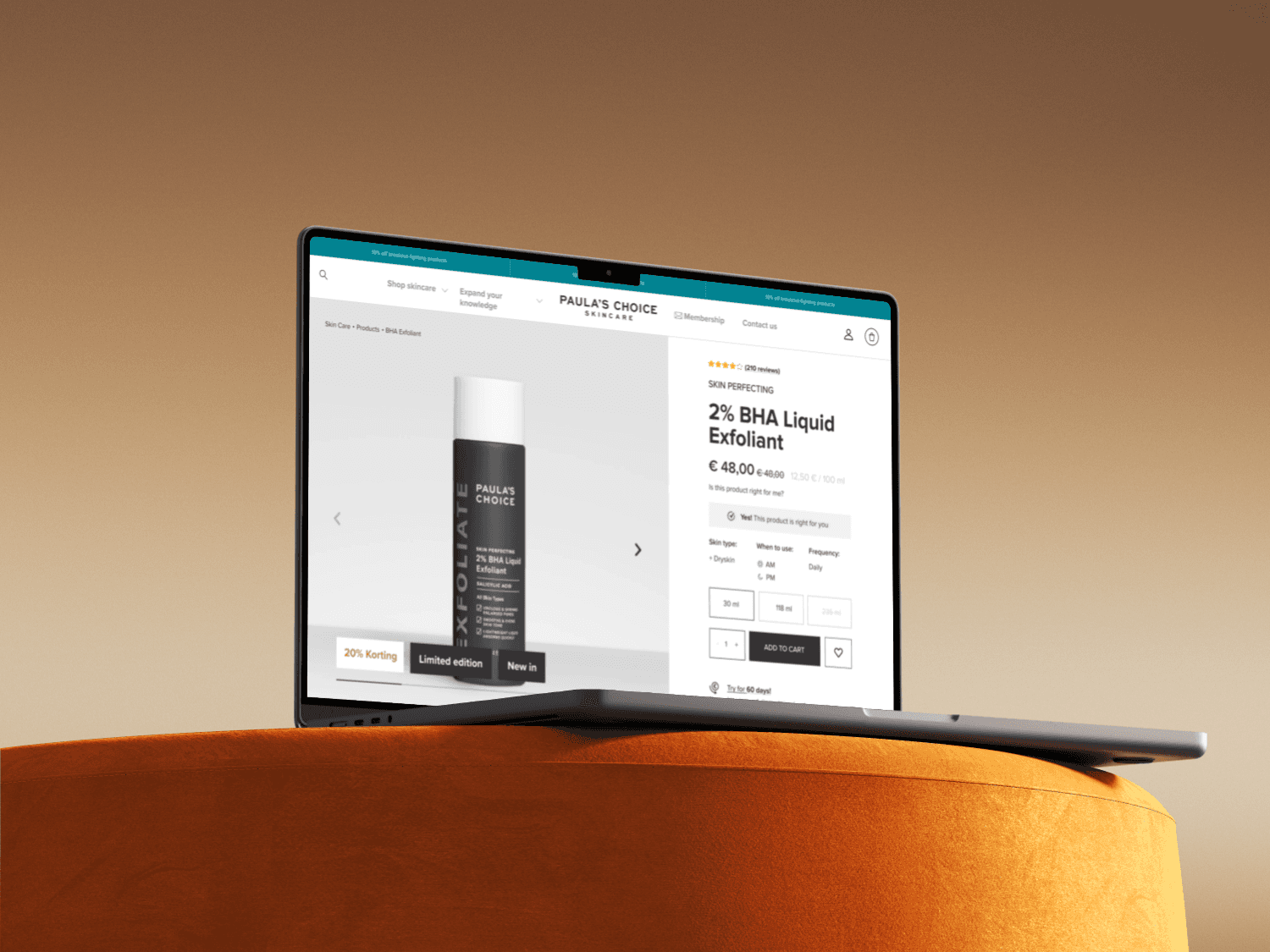
A conceptual redesign of the Paula’s Choice EU website, exploring the future of AI-powered product discovery and personalized skincare experiences.
This project is currently experimental and has not been implemented. It explores a conversational commerce model using AI as an integrated skincare assistant. The concept is undergoing internal discussions and technical evaluations.
My Role
UX/UI Design, Concept Development, Conversational UX Writing
I led the end-to-end design for this prototype, working independently to define conversation flows, visual integration, and microinteractions. I also benchmarked best practices from other AI assistants and adapted them to a skincare context.
Part 1: Conversational Homepage Redesign
Goal
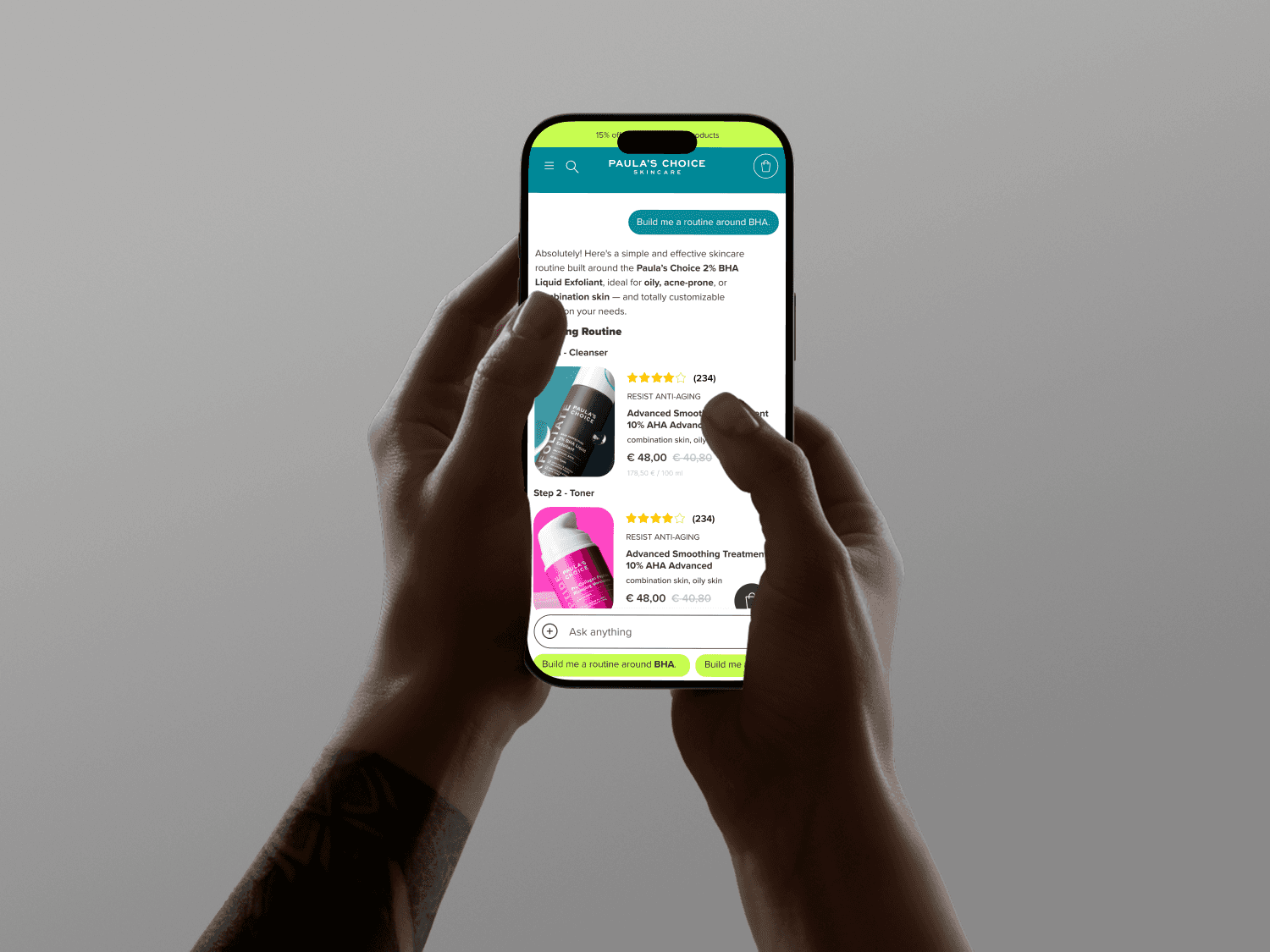
Reimagine the Paula’s Choice homepage as an interactive skincare assistant—where users can simply ask questions and get personalized recommendations instead of browsing through traditional filters and product listings.
Design Vision
We designed an AI-powered homepage experience where the virtual assistant becomes the starting point of the journey—not a fallback option. Instead of filtering categories, users can ask questions like:
"Build me a routine for Seattle in the summer"
"What products should I take on holiday with me?"
The assistant responds in natural language, filters results accordingly, and guides users through contextual conversations, all while retaining the brand’s clean and clinical aesthetic.

Key Features & Tools
Integrated Conversation Starter: A natural language prompt embedded at the top of the homepage invites users to start typing immediately.
Contextual Search Suggestions: Below the input field, we display smart starter queries tailored to seasons, routines, or common skin concerns.
Conversational Product Discovery Flow:
Filters update live as the conversation progresses
Educational nudges help users understand ingredients and routines
Option to upload a photo for deeper personalization (linked to PDP flow)
Save & Incentivize Feature: If users attempt to exit the flow, a before-you-go popup encourages account creation to save the conversation and receive a 10% discount.
Homepage User Flow
1. Start conversation from input field (e.g., "I need a routine for oily skin")
2. AI responds with product suggestions + contextual filters
3. User can refine via follow-up questions or switch categories (cleanser, exfoliant, etc.)
4. AI learns context and saves session
5. Exit intent popup offers incentive to create an account and save routine
Why This Design?
We observed that many users land on the homepage without a clear starting point. The traditional promotion-heavy layout often overwhelmed rather than guided. This concept gives control to the user via a friendly, smart, and helpful AI companion, reducing decision fatigue and improving confidence.
Hypothesis
Improve product discovery by lowering friction
Increase time-on-site and likelihood of multi-item purchases
Boost account creation and CRM opt-ins
Part 2: Conversational Product Detail Page (PDP) Redesign
Goal
Transform the static PDP into an AI-powered consultation interface that tailors product information to the individual user’s skin type, concerns, and behavior.
Design Vision
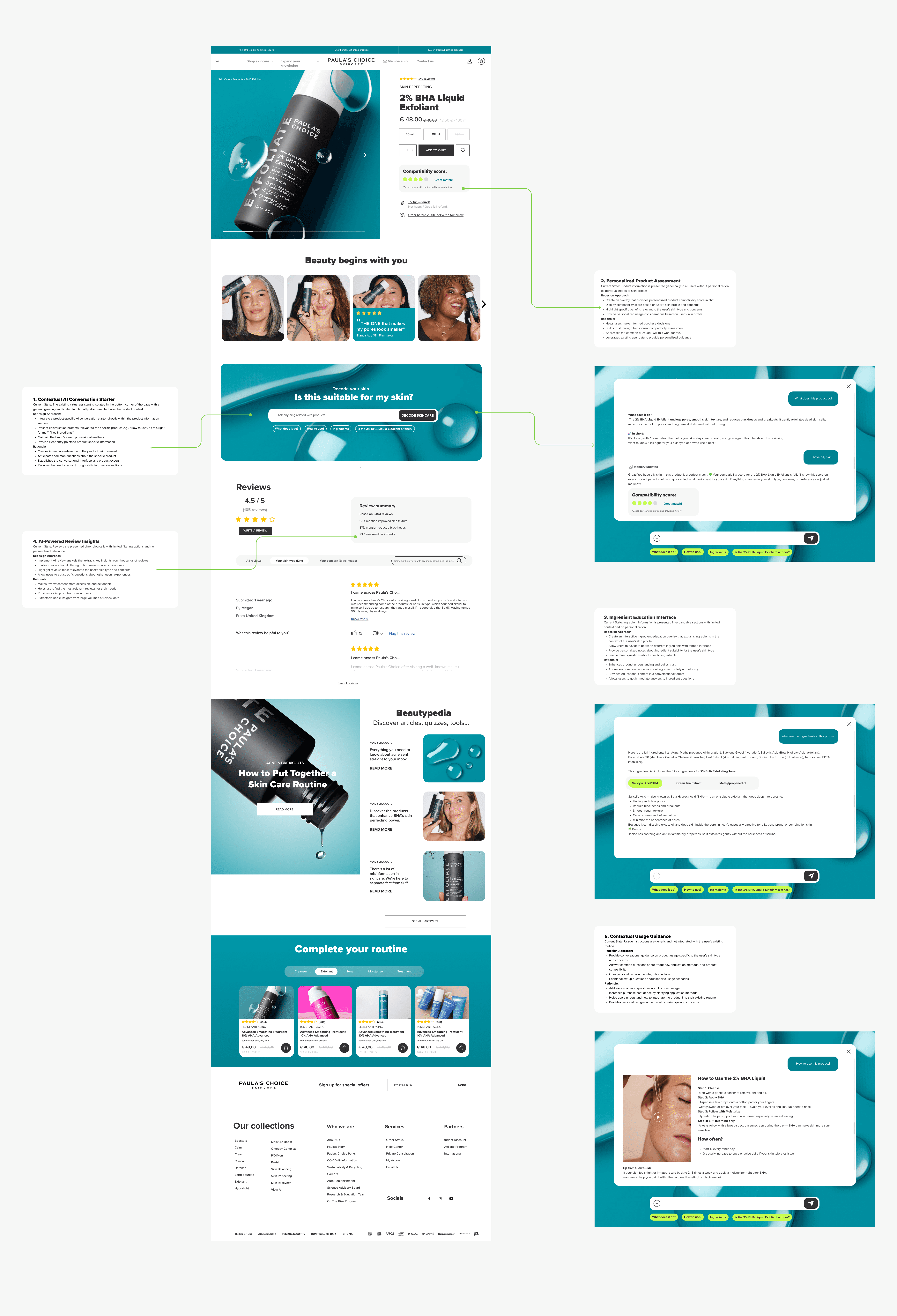
We redesigned the PDP as an interactive and educational product consultation, using the same AI assistant with context-specific logic.
The conversational overlay activates once a user asks a question (e.g., "Is this good for oily skin?") or engages with prompts like:
"Is this suitable for my skin?"
"Can I use this while pregnant?"
Key Features & Tools
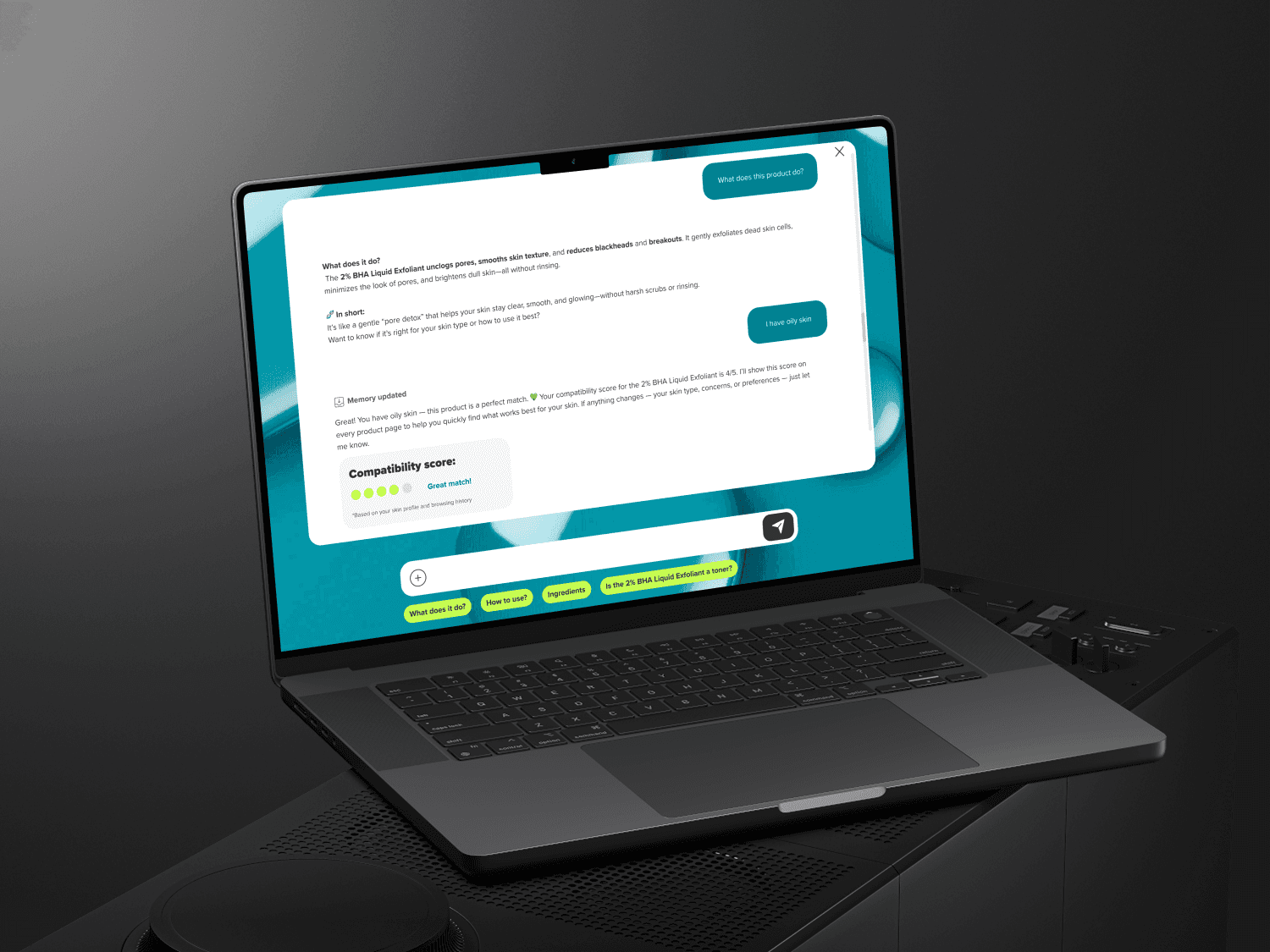
Conversational Product Assessment: AI explains how the product benefits the user based on uploaded photo, skin concern, or stated needs.
Ingredient Education Mode: Allows users to ask, “What does salicylic acid do?” and get digestible, evidence-backed answers without leaving the page.
Contextual Usage Guidance: AI explains exactly how to use the product based on the user’s existing skincare steps.
AI-Powered Review Insights: Surfaces reviews from customers with similar skin types or concerns.
Compatibility Score Tool: One of the most experimental ideas, this tool uses customer data (if available) to assign a personal compatibility score with the product. It shows how well the product aligns with their past purchases, skin profile, and behavior
This aims to reduce product returns and boost confidence in purchasing.
PDP User Flow
1. User lands on product page
2. AI initiates with, “Want to check if this is right for your skin?”
3. User answers questions or uploads photo
4. AI gives a Compatibility Score + explanation
5. Option to dig into usage instructions, routine integration, or reviews
Why This Design?
Skincare PDPs are notoriously information-dense, yet they often lack personalization. We saw an opportunity to transform product exploration into product understanding—and provide users with real-time answers that replicate a professional consultation.
Experimental Impact
Though not yet implemented, this concept opens opportunities for:
Higher engagement on key product pages
More confident add-to-cart behavior
Lower return rates from misaligned purchases
Richer customer profiles through opt-in chats
It also shows what’s possible when AI, personalization, and UX design come together to reimagine ecommerce.